This article may contain affiliate links.
A review on a camera that was released four years ago could very much feel outdated and self-serving in the sense that writing a review on products one owns is just utterly convenient.
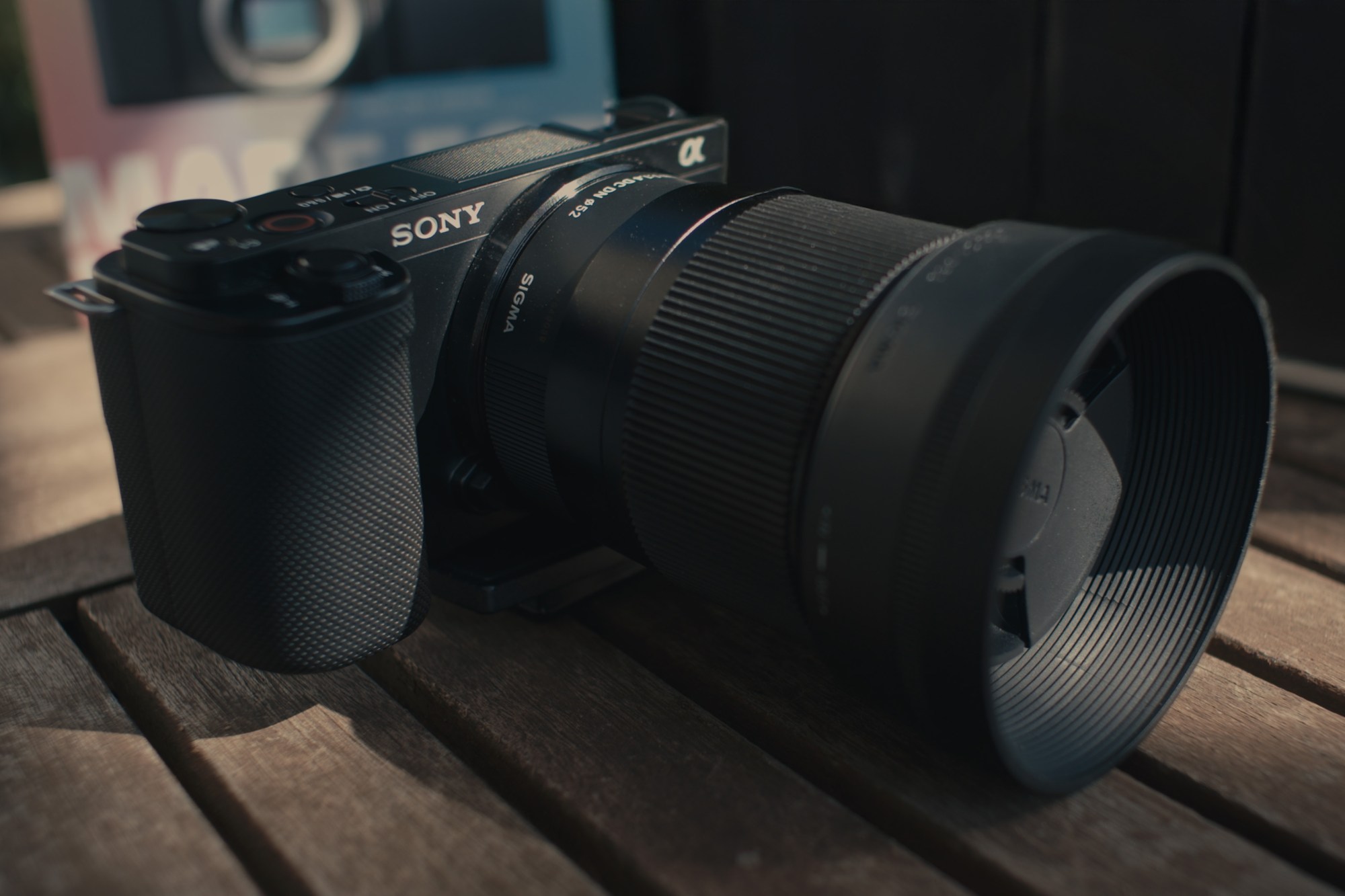
But the purpose of this article is exactly based on the fact that I have put hundreds of usage hours in this little machine during the year and a half since I have owned this camera – yes, I bought it three years after its release in February 2024 not long before its upgrade, the Sony ZV-E10 Mark II which was released in July 2024, a year after their big brother, the Sony ZV-E1 with a full-frame sensor.
So in this article, I’d like to talk about the purpose of this camera, who’s it for, and what’s it good for rather than diving into technical details as you can find those in on Sony’s official website and there are countless technical reviews on this camera as well.
But let’s go back in time a bit. If you’re reading this article, you might be considering picking one of these up either new or used, so first of all, I’d like to share why I decided to go for this specific camera in the first place instead of putting down some more money and getting a more powerful machine.
Who Is This Camera For?
Sony answered this question right on the design table of this camera: for content creators. To be more accurate, that design table was initially for its predecessor, the Sony ZV-1, which was the ultimate vlog camera released in 2020. (Conveniently during COVID, where a lot of people started recording videos at home.)
However, it lacked an interchangeable lens system and was truly only for those wanting to record themselves as they go about their days but without much need of how and in what quality they record.
That said, with that camera, Sony introduced a new type of camera to the market, and soon other brands jumped on the idea as well.
A year later in July 2021, the Sony ZV-E10 came out. A small, little camera with an APS-C sensor, an interchangeable E-mount lens system, and packed with features fully dedicated for recording videos at an accessible price.
Now, the idea of a camera dedicated for content creators is absolutely valid. As someone who’s spent the past 13 years recording YouTube videos and online content but has also done professional-level filmmaking and took a glimpse into the in-betweens, I can honestly say that to record videos for online platforms, a camera like the Sony ZV-E10 is absolutely enough, even now in 2025. Naturally, the type of content you want to create and your own artistic needs or your tech-geekiness might go against this statement, but to record talking head videos, vlogs, travel content, cooking content – to be honest, all sorts of content including professional UGC and video presenting work – trust me, it’s enough. I’m doing it.
What Do You Need As A Content Creator?
Generally, what you need as a content creator is 4K quality, good autofocus, and an interchangeable lens system. I would add a camera with a compact size, but that’s more about convenience. I have a smallrig cage on the camera, for example, so it’s almost as big and heavy as an FX-30.
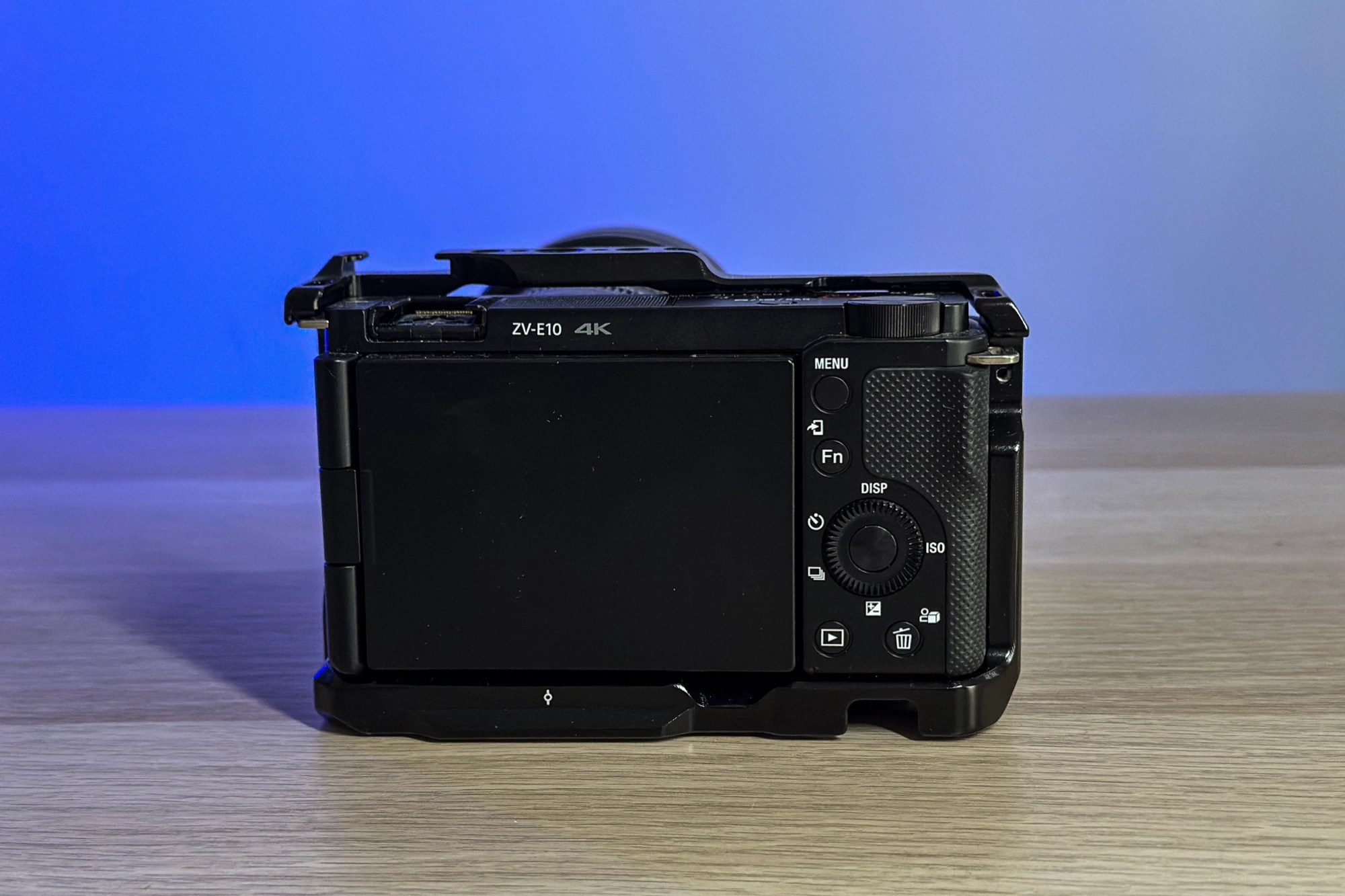
But that’s it. Maybe we can add a flip screen so you can see yourself when setting up your frame, but again, that’s also just convenience.
Before this camera, I had a Panasonic Lumix G7, which came out in 2015, and I used it for 9 years. The only real reason I switched to the ZV-E10 was because that camera lacked good autofocus, and after almost a decade of not being able to move away of my locked manual focus, I decided it was time for an upgrade. But that camera already had everything I needed for content creation.
So when you see creators rocking heavy-weight (not literally meant) cameras like the Sony FX-30 or full-frame ones like the FX-3 or one from the Alpha 7 line, don’t instantly think that that’s what you need as well. Sure, the quality difference can be significant; full-frame is full-frame, and a 10-bit image will look much better than an 8-bit on an APS-C sensor, but remember, that “great power comes with great responsibility”, or in this case, with the need for great knowledge and a lot of money because full-frame gear is more expensive in general. Then, shooting 10-bit log will, yes, give you the flexibility to grade the hell out of your files, but would you know how to do it?
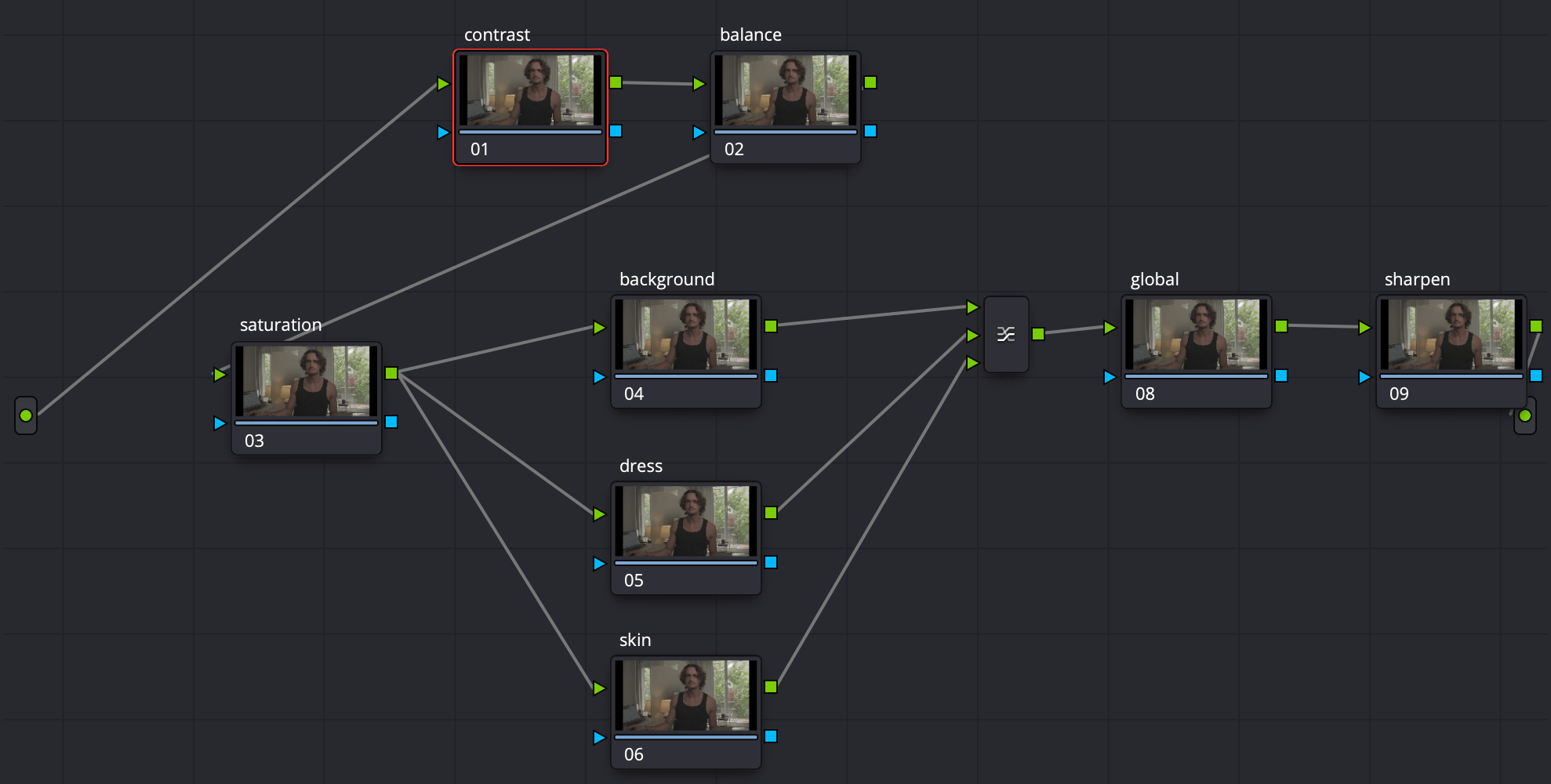
Because apart from the fact that I have deuteranopia (red-green colorblindness), which makes color grading exceptionally difficult for me, I still don’t know how to color grade on a high level. But maybe you see colors well, you know the different shades, and so on, and maybe you learn the technicalities, master Davinci Resolve Studio – will your computer hold up?
As a reference, the moment I start doing a more complicated grade with tracked maskes and color separation, my M3 Pro MacBook Pro starts sweating harder than me at the gym – and I’m talking about 4K 8-bit MP4 files, not 10-bit raw or log.
The thing is that full-frame territory is either for filmmakers, videographers, or very high-level content creators that have the funds to not deal with these technicalities. There are, of course, creators like Peter McKinnon or Matt Hapooja that are both content creators and filmmakers, so of course, they use high-level tech also for content creation.
To be honest the filmmaker in me would also use. In fact, I do have a Blackmagic Pocket Cinema Camera 4K that is, though also a little outdated and more like an entry-level professional camera and actually has a smaller M43 sensor than the Sony, but it still produces a higher image quality than the Sony ZV-E10. But I don’t use it for content creation. Why? Because it lacks the convenient features that you need for content creation – apart from shooting in 4K.
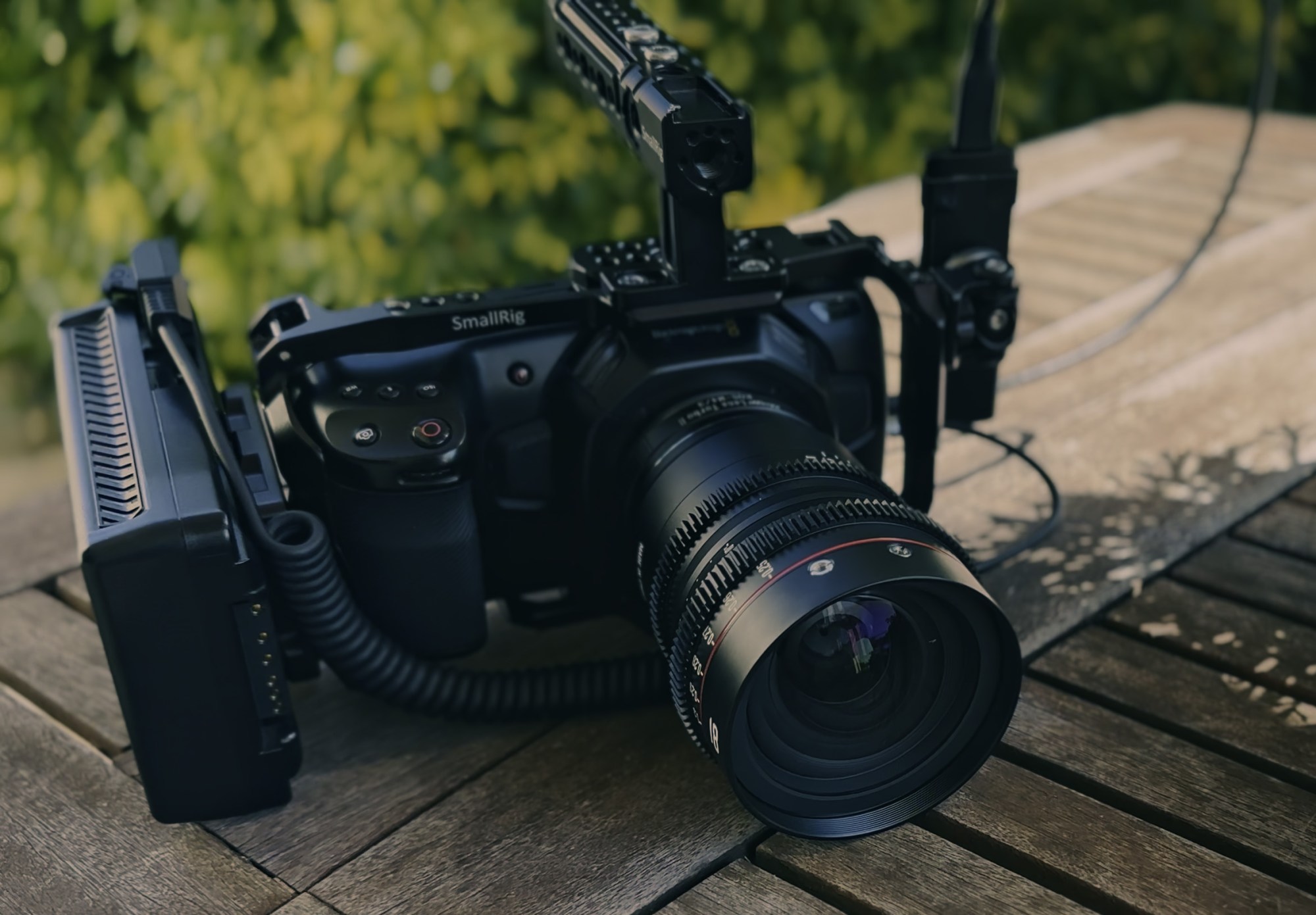
But the content creator in me knows that content creation is about convenience, therefore he doesn’t use high-tech gear for content creation.
Filmmaking is a team sport, a group effort where multiple people are responsible for getting the shot right. But content creation is very often a single-player game therefore, you need to be able to operate your camera all on your own even without much knowledge about cameras and settings.
That said, If I had to recommend one camera that is both a professional camera and has the conveniences of content creation, I would maybe suggest the Sony FX-30. But it’s around $1,600, and then you only have a body without any lenses. The Sony ZV-E10 is around $800, the Mark II is about $1,000, and with the remaining money, you can buy 1-2 lenses that will be highly responsible for video quality anyway.
So what do you need as a content creator? A camera like the Sony ZV-E10. Then, if you start falling in love with video and cinematography and have the money, you can always upgrade to cameras with even higher image quality. That said, the camera does have some limitations that are good to be aware of.
Limitations of the Sony ZV-E10
- When it comes to shooting formats, it doesn’t offer too many options. You can shoot either FullHD or 4K. No in-betweens.
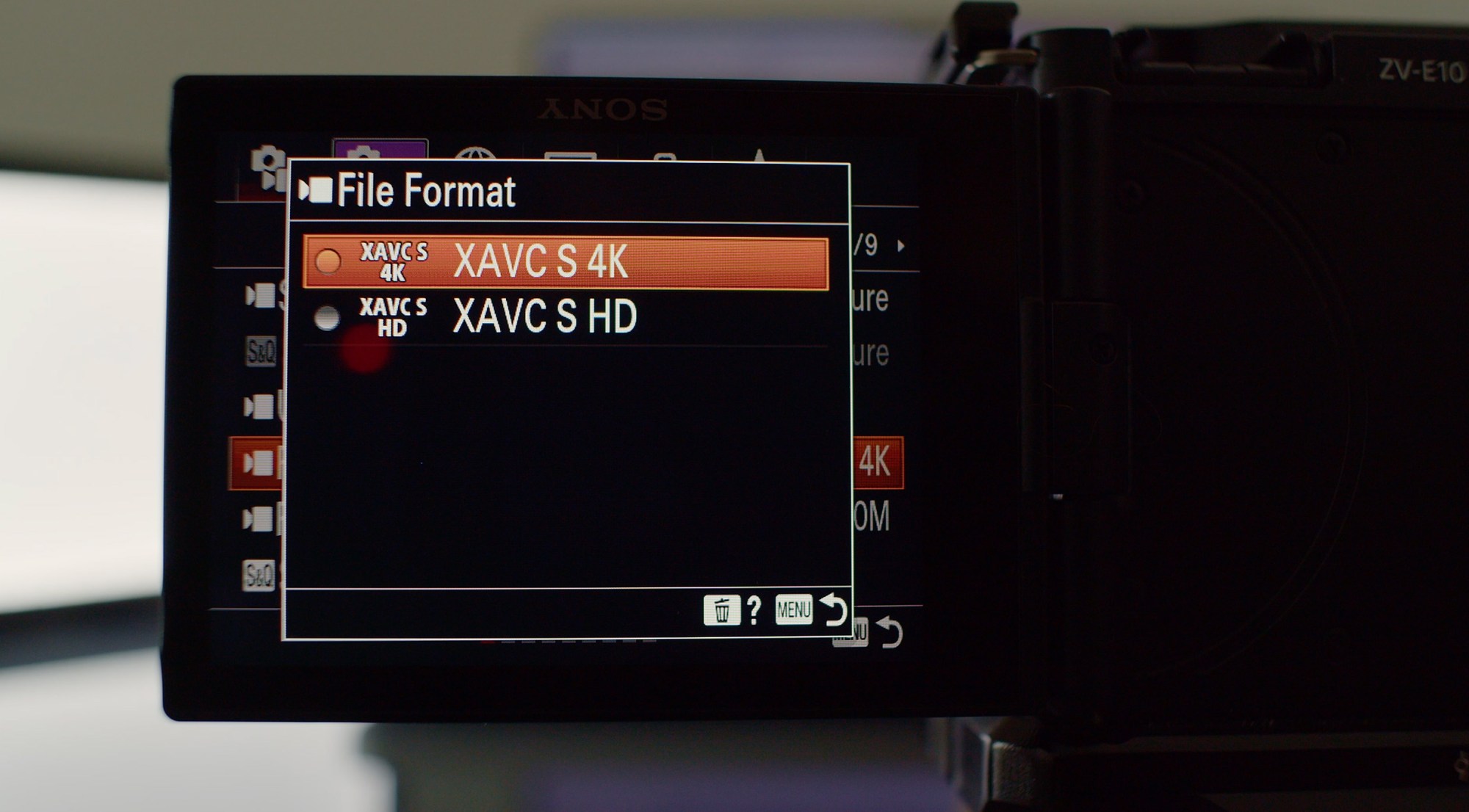
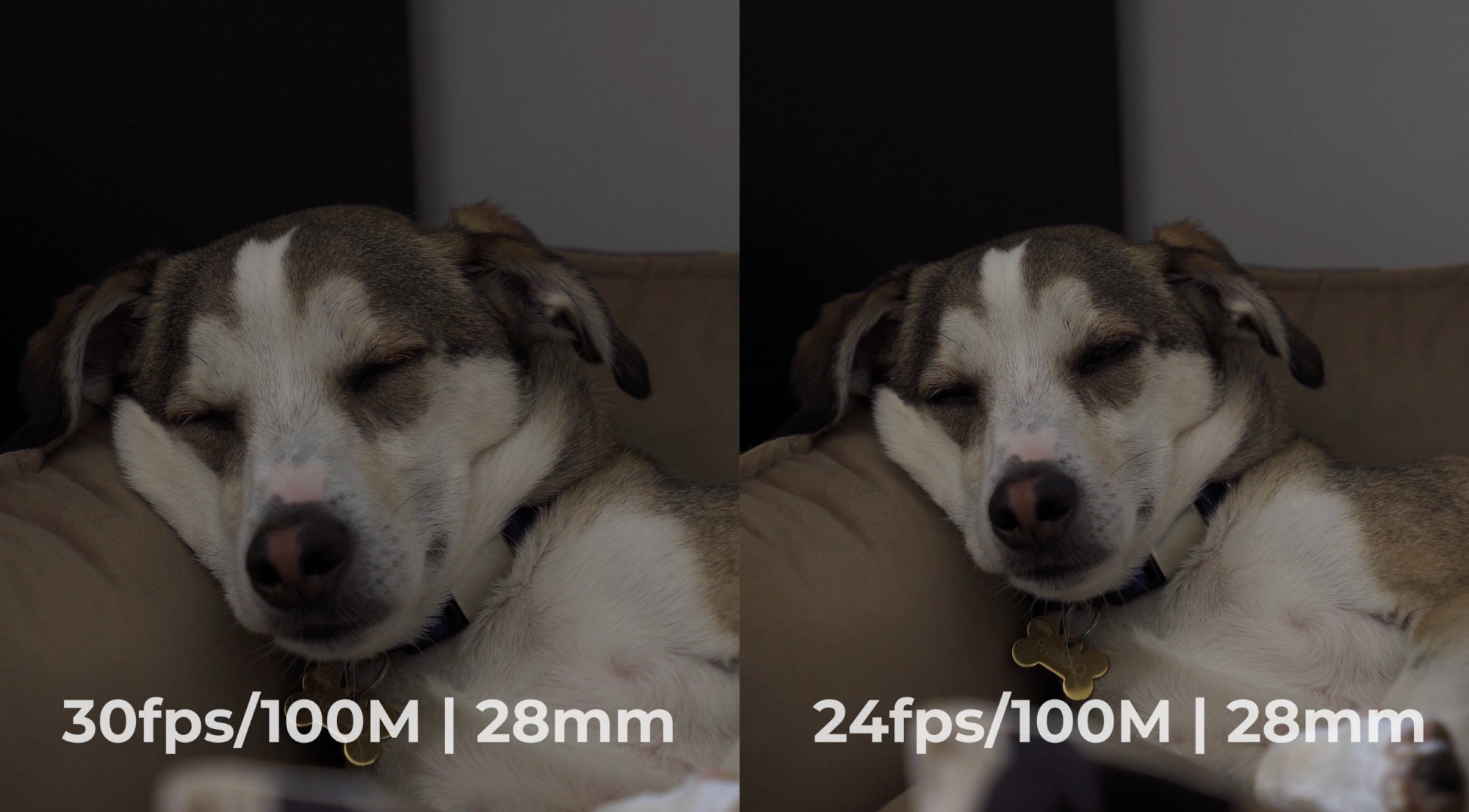
- When you’re shooting 4K 30 fps at a 100M, you’ll get a crop, so you have to factor that in when you’re choosing your lens.
For instance, for vlogging, you might want to look at an extra-wide focal length, especially if you have the Active Steady shot stabilization turned on, because with the crop of 4K 30p 100M and the Steady shot, your 18mm will very quickly turn into 28mm. You don’t have to worry about the quality, however, because the sensor’s resolution is 6000×4000, so the 4K video is actually downsized from 4K, so there is room to crop. Still, it’s good to keep that in mind.
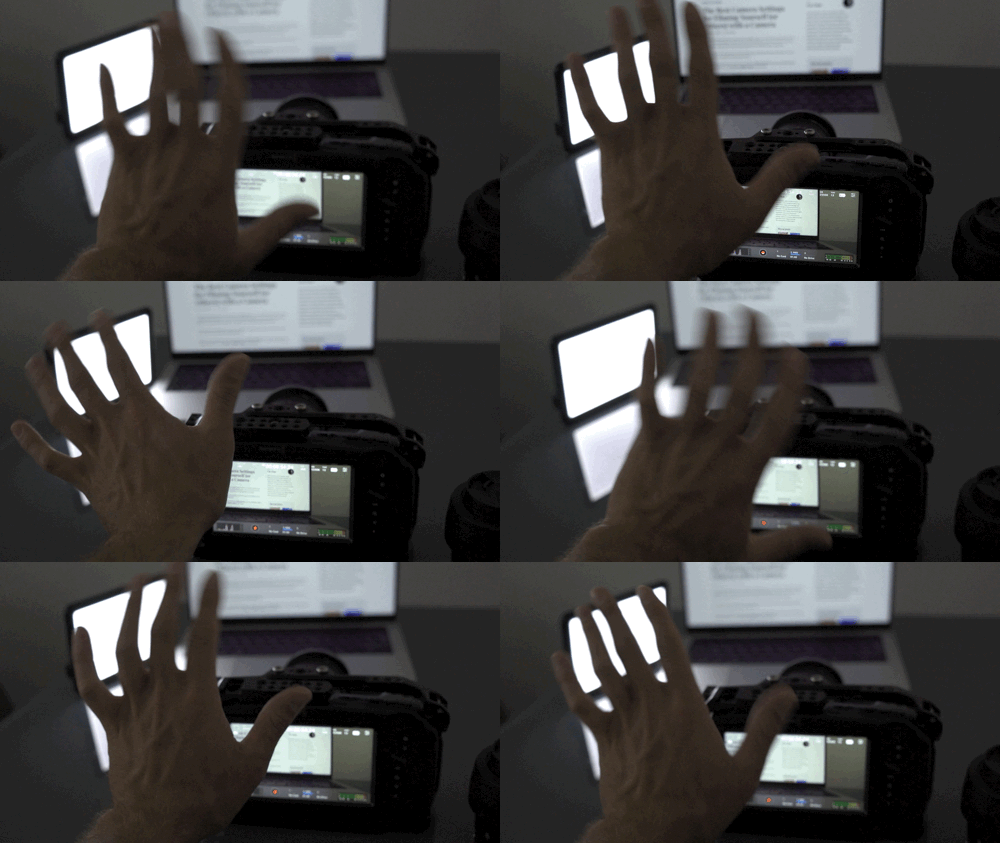
- Avoid quick movements; the rolling shutter effect is pretty strong on this camera, and while the stabilization helps, your straight lines will get curved really fast if you move the camera around too fast, or your subject moves to fast.
- The battery life is tops: 2 hours for constant video recording, and if the outside temperature is too hot or you try to charge it while shooting, it might overheat.
- If you need to record in 60p, you can only do it in FullHD.
And honestly, that’s it; if I remember something, I’ll update the article.
Final Thoughts
I love this camera. I don’t love it because it’s my first-ever camera, and I don’t know better. It’s not. We shot one of my short films on the Arri Alexa 65, another one on the Alexa Plus, a third one on the Arriflex 16SR3 16mm film camera, and I also shot a short film on my rigged-out Blackmagic Pocket Cinema Camera 4K. So I know the differences between a camera and a camera.
But knowing also means that you know when less is enough, and for content creation – high-quality content creation – the Sony ZV-E10 is perfectly enough. It saves you money, space, and time – basically all the things people in general lack, so I would still 100% recommend it to anyone looking for a camera to make videos with. I also always like to say to spend less on the camera body and more on lenses because the lens is the heart of the camera and will ultimately define the final look of the image.
So if you’ve been considering picking up one, here’s a link to it and also some other similar cameras that are made for content creators:
Sony ZV-E10: https://amzn.to/45zlfBd
Sony ZV-E10 Mark II: https://amzn.to/3Ga9979
Canon PowerShot V1: https://amzn.to/45uMyg5
Fujifilm X-M5: https://amzn.to/3T2iGQI
Nikon Z30: https://amzn.to/4kRu7H2




 Film Yourself Academy
You must be logged in to post a comment.